
Smyrna Root Zone Calculation for TPZ Fencing: Compliance Guide
In Smyrna's growing areas like the Historic Depot District and Smyrna Heights, proper TPZ fencing requires precise root zone calculations. Rutherford Rent-A-Fence provides compliant CRZ assessments tailored to Smyrna's clay-rich soils and municipal codes. Our local expertise ensures your construction projects near landmarks like MQY Airport meet all regulations without costly delays.
Root Zone Calculation for TPZ Fencing in Smyrna
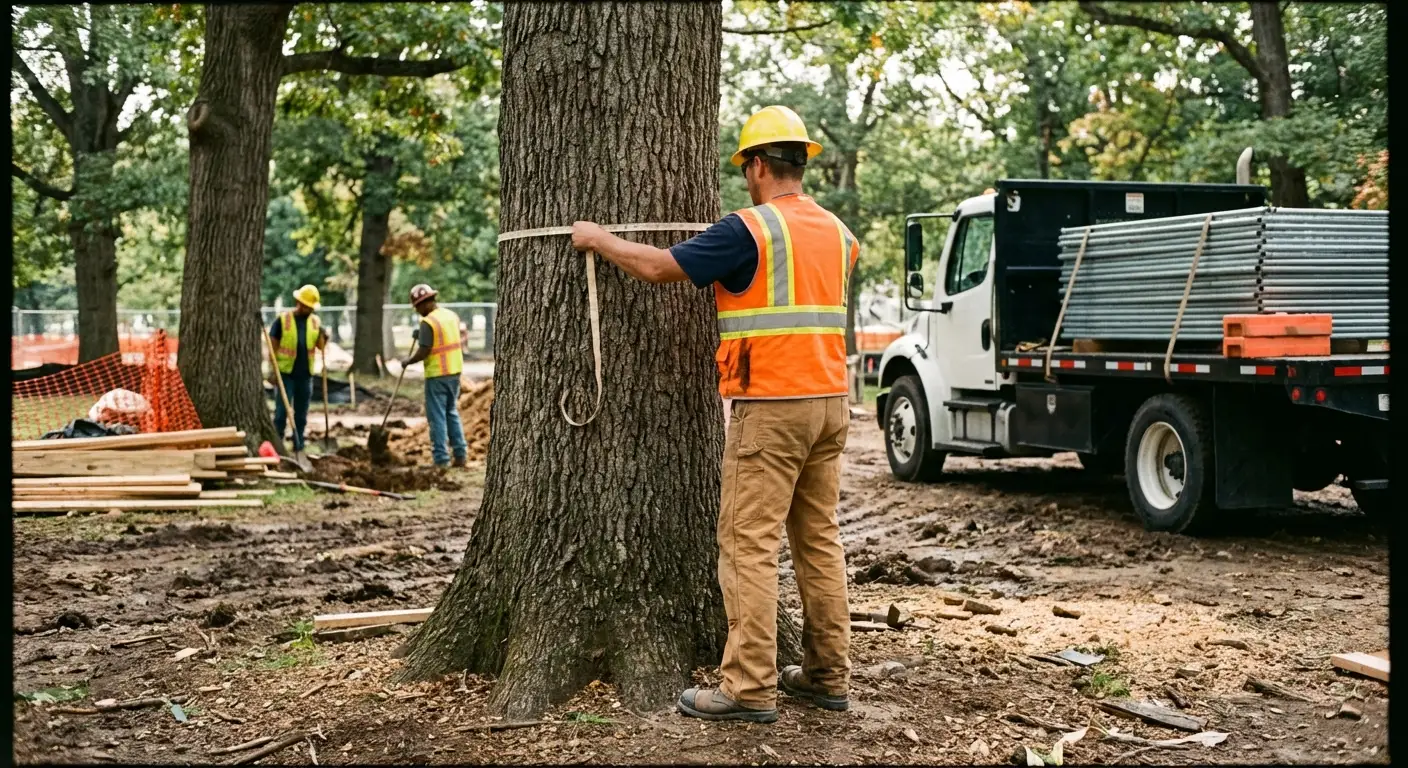
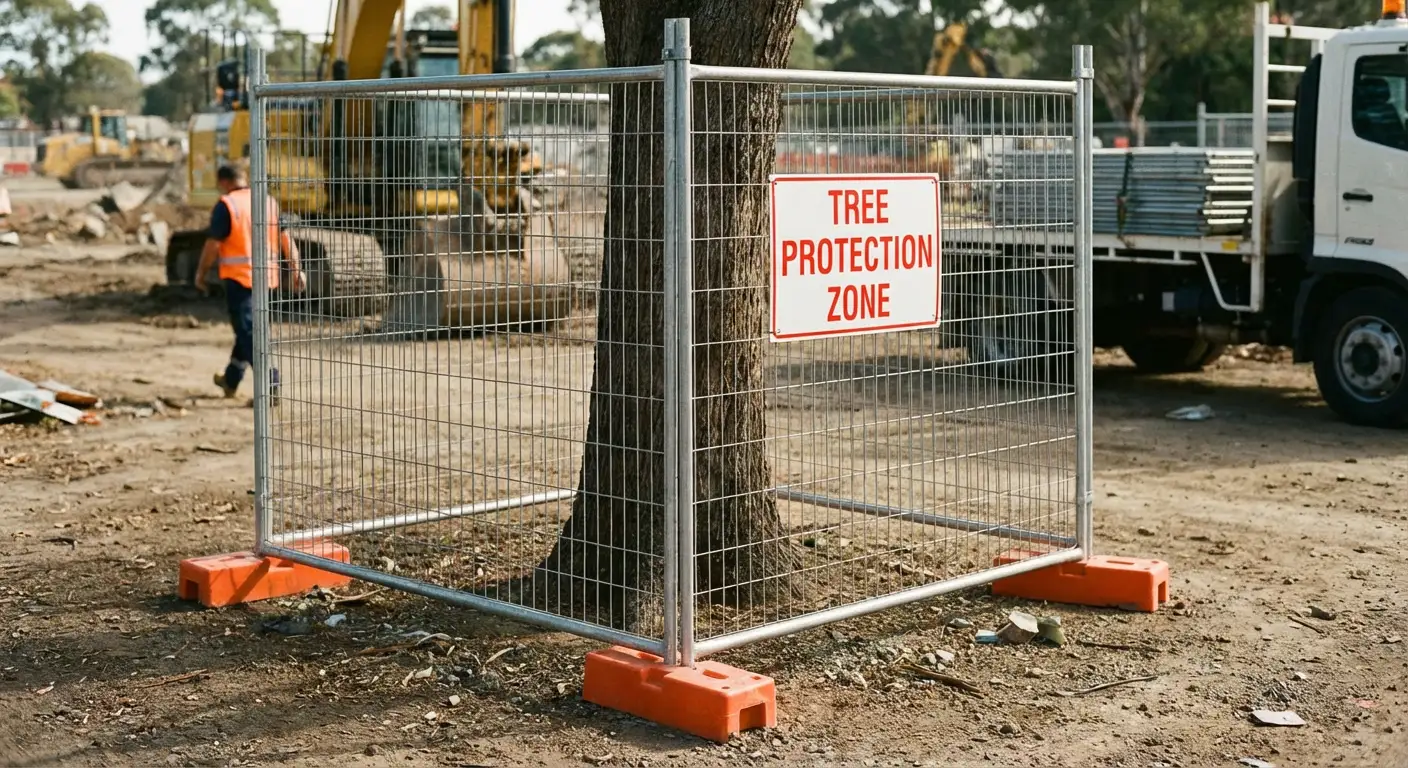
When we set TPZ fencing on a job in Smyrna, we start with the root zone, not the fence line. I remember a site near the Historic Depot District where the ground held old fill and the tree roots ran wider than the canopy. That’s why we measure first, then place the tree protection zones hardware with enough stand-off to keep boots, pallets, and equipment out. For tighter layouts, we use temporary gates, concrete steel bases, and zero trip hazard details so the perimeter stays clean. That’s how we keep the work compliant and the tree alive.
Calculation Steps
- [object Object]
- [object Object]
- [object Object]
| TPZ step | What we do | Why it matters |
|---|---|---|
| Root zone measurement | We map the protected area before setting panels. | It keeps excavation and foot traffic out of the critical roots. |
| Fence placement | We set the line beyond the root spread and stabilize each section. | It prevents soil compaction and accidental encroachment. |
| Access control | We add gates only where crews need them and keep them closed. | It cuts down on shortcuts that damage the TPZ. |
Calculating Root Zones for Smyrna TPZ Fencing
Root zone calculations for TPZ fencing in Smyrna Heights require measuring from the tree trunk to the drip line, then adding a buffer for equipment clearance. The Lee Victory Recreation Park area mandates 1.5 times the drip line radius for mature oaks. Use non-invasive bases when installing near Lowry Street Corridor properties to prevent soil compaction violations under DEQ Standards. Post-1980 construction sites near Nissan plant expansion zones often require additional root mapping.
Key Terminology
- TPZ
- Tree Protection Zone fencing perimeter
- Critical Root Zone
- Area beneath tree canopy
- Drip Line
- Outer edge of tree branches
- Soil Compaction
- Density increase from equipment
- Root Barrier
- Physical root deflection system
- DEQ Standards
- State environmental compliance rules
In Simple Terms
Measure from trunk to drip line, add buffer for equipment access.
TPZ Fencing Compliance Standards for Smyrna Properties
Regulations protect tree health during temporary fence installations in Smyrna neighborhoods.
| Minimum TPZ Radius | 8 feet from trunk base (Smyrna municipal code) |
|---|---|
| Maximum Fence Height | 6 feet for residential zones near Lee Victory Recreation Park |
| Material Restrictions | No metal spikes within 4 feet of root zone |
| Installation Method | Post holes must avoid major roots (>2" diameter) |
| Permit Requirements | Required for TPZ fences over 50 linear feet |
| Inspection Scheduling | 48-hour notice for Smyrna city inspections |
| Signage Interval | Every 30 linear feet |
TPZ Fencing Compliance in Smyrna
Contact Rutherford Rent-A-Fence for accurate root zone calculations.
Common Mistakes in Root Zone Calculation for TPZ Fencing Compliance
In Smyrna’s changing landscape, accurate root zone calculation for TPZ fencing is crucial. Mistakes here lead to costly damage or compliance failures. Our crew has seen what happens when shortcuts get taken on this vital job.
Ignoring Tree-Specific Root Spread Variations
Misjudging root zones causes fence placement inside critical root areas, risking tree health and violating local regulations around Hazelwood and Historic Depot District properties.
Measure root zones based on species and size, not just general rules, ensuring protection aligns with Smyrna’s tree preservation standards.
Relying Solely on Surface Measurements
Surface-only assessments miss deeper root extensions, leading to trenching that damages roots unseen beneath, especially around older trees near Lee Victory Recreation Park Area.
Use ground-penetrating tools or consult arborists for a full root profile before installing fencing posts in TPZs.
Overlooking Soil Conditions Impact on Root Zones
Failing to factor in Smyrna’s varied soil types, especially near the Nissan assembly plant area, results in underestimated root zones and possible fence failure from root disturbance.
Assess soil moisture and compaction to adjust root zone boundaries accurately before fencing installation.
Not Coordinating with Local Tree Protection Ordinances
Noncompliance with Smyrna’s strict ordinances can lead to fines and forced fence removal, disrupting projects in residential and commercial zones alike.
Review local tree protection regulations in detail, then map TPZ fencing accordingly to maintain compliance.
Neglecting Post-Installation Monitoring of Root Zone Impact
Without follow-up, unnoticed root damage from fencing can kill valuable trees, creating liability issues and costly replanting in neighborhoods like Hazelwood.
Schedule regular inspections after fence setup to spot stress signs and address root damage early.
Root Zone Calculation for TPZ Fencing: Precision That Meets Smyrna’s Tree Protection Rules
It's not just a fence—it's the only thing standing between your job site and a lawsuit. Since 2011, we’ve treated every temporary perimeter as a legal and ecological boundary. In Smyrna’s fast-growing corridors, where construction meets mature canopy, our calculations prioritize both OSHA safety and living root systems. We don’t guess distances; we measure, document, and adapt.
-
Accurate Root Zone Mapping
We begin every TPZ fencing job by physically measuring and marking the critical root zone around protected trees in Smyrna. This ensures our fence line respects municipal ordinances while maintaining structural integrity on uneven or root-dense terrain.In PracticeOn a site near the Historic Depot District, we adjusted panel spacing to avoid trenching within 15 feet of a mature oak’s drip line.
-
Stable, Non-Invasive Anchoring
Our crew uses concrete-steel bases instead of driven posts inside tree protection zones to prevent root damage. These bases provide wind-load resistance without penetrating the soil, complying with both OSHA and local Smyrna landscape codes.In PracticeAt a Lowry Street Corridor development, we deployed concrete-steel bases to secure panels around a cluster of young maples.
-
Dynamic Layout Adaptation
Tree root zones aren’t perfect circles—we account for slope, soil compaction, and canopy spread when plotting the fence perimeter. Our modular panels and interlocking hooks allow tight turns without gaps or trip hazards.In PracticeIn Smyrna Heights, we curved the fence line using interlocking hooks to follow the irregular root zone of a heritage hickory.
-
Compliance Through Documentation
We photograph and log every TPZ fence installation, noting base type, panel spacing, and distance from trunks. This paper trail supports your SWPPP or tree ordinance compliance during inspections by Rutherford County or Smyrna officials.In PracticeAfter installing tree protection zones near Malco Smyrna Cinema, we provided timestamped layout records for the site engineer.
Rutherford Rent-A-Fence commits to TPZ installations that honor Smyrna’s tree ordinances without sacrificing site security or crew safety—because protecting roots and preventing liability go hand in hand.
Root Zone Calculation for TPZ Fencing in Smyrna, TN
TPZ fencing in Smyrna follows root-zone measurements, local site limits, and field layout near Hazelwood, MQY, and the Historic Depot District.
How is the root zone set for TPZ fencing in Smyrna, TN?
Start with the trunk diameter at breast height, then measure the protected area by the arborist’s root zone method and mark the Tree Protection Zone before fence posts go in. Around Hazelwood and Smyrna Heights, crews keep the fence outside that line so roots stay covered and soil stays firm.
Why does TPZ fencing matter near the Smyrna/Rutherford County Airport (MQY)?
At MQY, ground vibration and repeated traffic can compact soil fast. TPZ fencing keeps equipment, storage, and foot traffic out of the root zone so fine roots near the Historic Depot District tree canopy do not get crushed or cut during site work.
What happens if a fence line crosses the root zone?
When a fence line cuts through the root zone, roots get severed and the soil dries out faster. In Smyrna’s 1980_2000 growth areas near the Nissan plant corridor, that usually shows up as canopy thinning, leaf drop, and stress after grading or trenching.
Do fence posts need to stay outside the TPZ in Rutherford County?
Fence posts belong outside the TPZ unless the site arborist approves another setup. In Smyrna Heights and Hazelwood, hand-set posts, weighted bases, or surface protection are used where digging would hit feeder roots or disturb grade near the trunk.
What does OSHA expect during tree protection work?
OSHA expects site conditions that reduce struck-by and trip hazards, along with clear barriers and marked access routes. In the Historic Depot District, that means the TPZ fence stays visible, gates stay controlled, and workers avoid storing pallets, spoil, or concrete wash inside the protected area.
How do crews handle sloped ground around the root zone?
On sloped ground, the fence follows the protection radius, not the curb or building line. Around Hazelwood and the MQY approach roads, crews keep the barrier level enough to stay visible and avoid creating runoff paths that wash mulch or soil out of the root zone.
Root Zone Calculation for TPZ Fencing Compliance
Ensure Smyrna TPZ fencing meets regulations with proper root zone calculations. Contact Rutherford Rent-A-Fence for compliant solutions.
Serving Smyrna with OSHA-compliant temporary fencing solutions.